





Recent action stands in stark contrast from just a few weeks ago, and the new highs come despite the war with Iran. Why?
Largely, that’s because the stock market reflects what investors expect will happen down the road, not how things look right now. Economists and market analysts often point out that stocks move based on predictions about the future—where the economy, profits, and interest rates are headed—rather than a simple snapshot of today’s conditions.
In essence, with a ceasefire in effect, investors collectively believe that the war will end soon and oil and other commodities will gradually exit the Strait, limiting any economic impact at home.
On Friday morning Iran said it would fully open shipping through the Strait of Hormuz, a critical chokepoint that handles roughly one‑fifth of the world’s oil supply. Oil tumbled by $10 per barrel, stocks added to recent gains, but the president said the blockade of Iran will continue.
Note in the graphic below that stocks have closely tracked the price of oil since the war began. The vertical dashed lines highlight investor reaction to changing oil prices.
Between March 30 and April 7, however, stocks began to break free of oil’s tight grip. Rising crude prices didn’t prevent investors from snapping up equities during that short period.
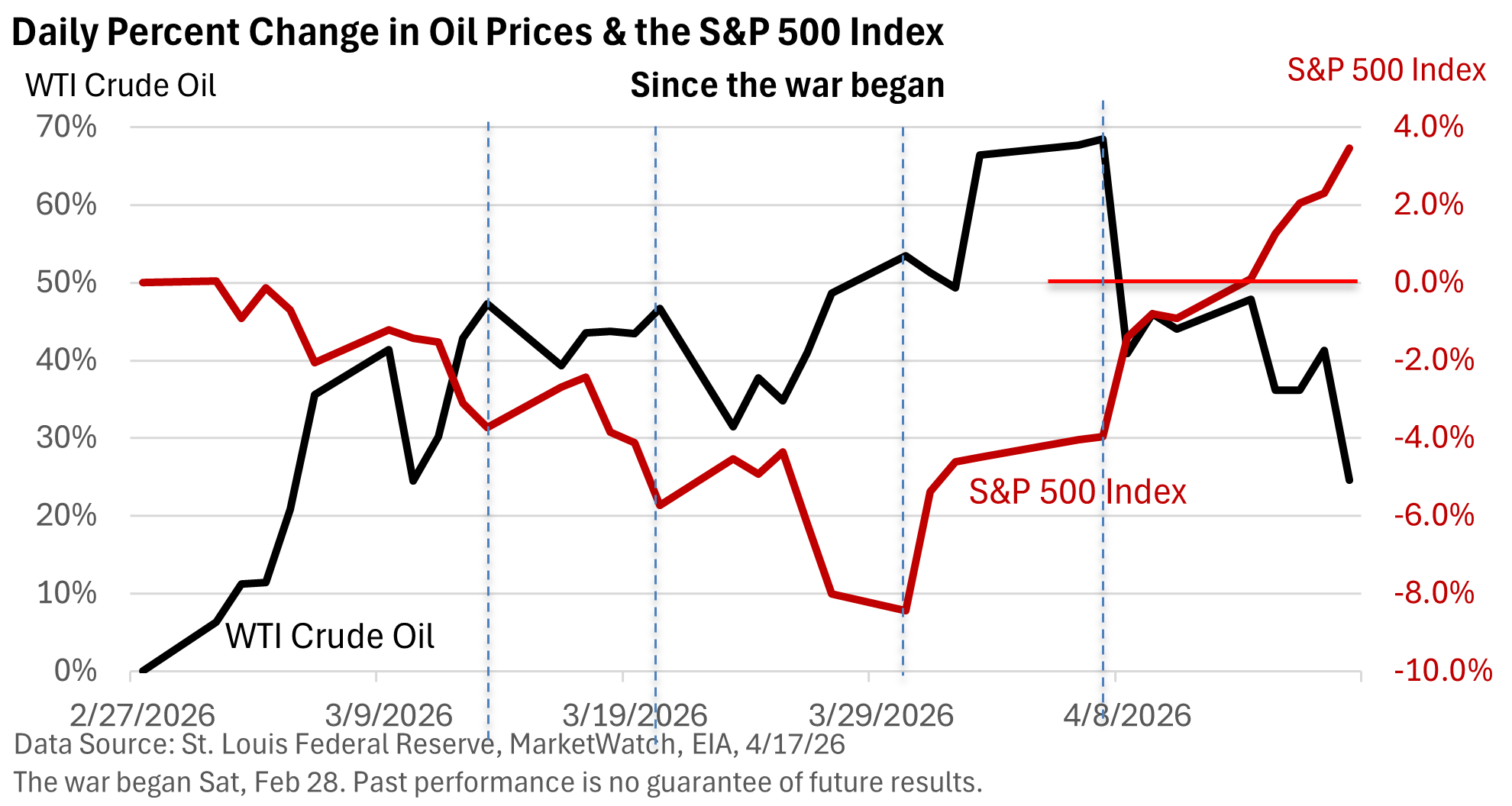
Although the decline in crude last week helped fuel recent gains in stocks, investors are collectively betting that a new round of hostilities won’t reignite.
The expanding US economy, expectations of a very strong Q1 profit season, stable interest rates, and rising profit estimates for the remainder of the year, according to LSEG, are also fueling recent optimism. In short, the selloff in March was relatively restrained given the gravity of events in the Middle East. Continued economic and profit growth, coupled with the prospect the conflict will be resolved, has underpinned stocks.
