





The US Bureau of Labor Statistics published its final benchmark revisions covering employment during the 12‑month period between April 2024 and March 2025. The revisions showed that payrolls were revised lower by 898,000 jobs compared with the originally reported figures.
The 898,000 reflects the total number of jobs overstated once the BLS incorporated more complete Quarterly Census of Employment and Wages payroll-tax data. These counts are derived from state unemployment insurance tax records that nearly all employers are required to file.
In September, the preliminary benchmark estimate had suggested a larger reduction of 911,000 jobs, meaning the final revision was slightly smaller.
The September estimate did not include monthly breakdown estimates. Monthly revisions totaling 898,000 were incorporated in the January release.
Separately, the BLS also updates the methodology it uses to estimate monthly business openings and closures. These adjustments flow through to the employment data, impacting the reported job numbers for the remainder of 2025, April through December.
What does this look like graphically? The economy created fewer jobs than initially reported.
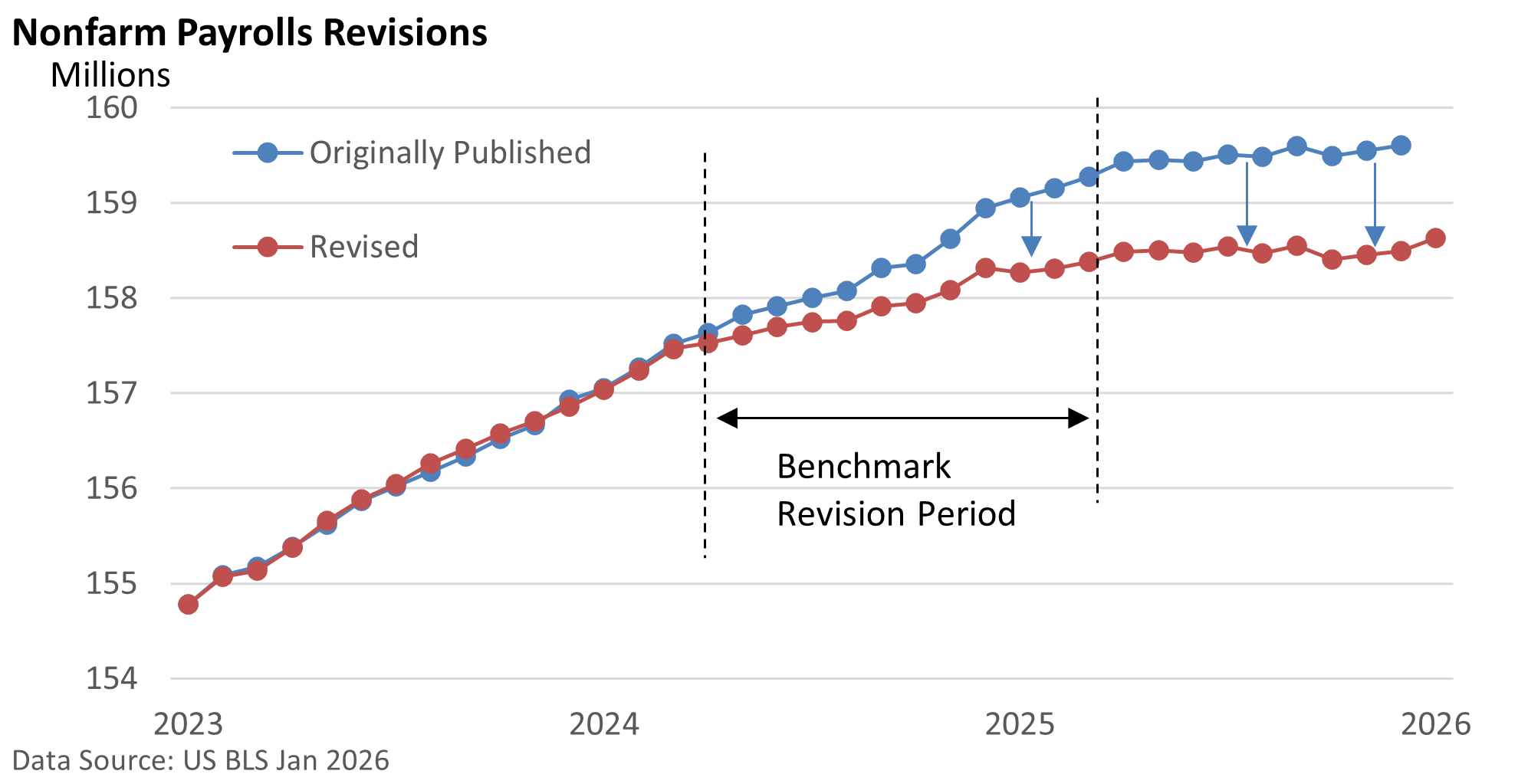
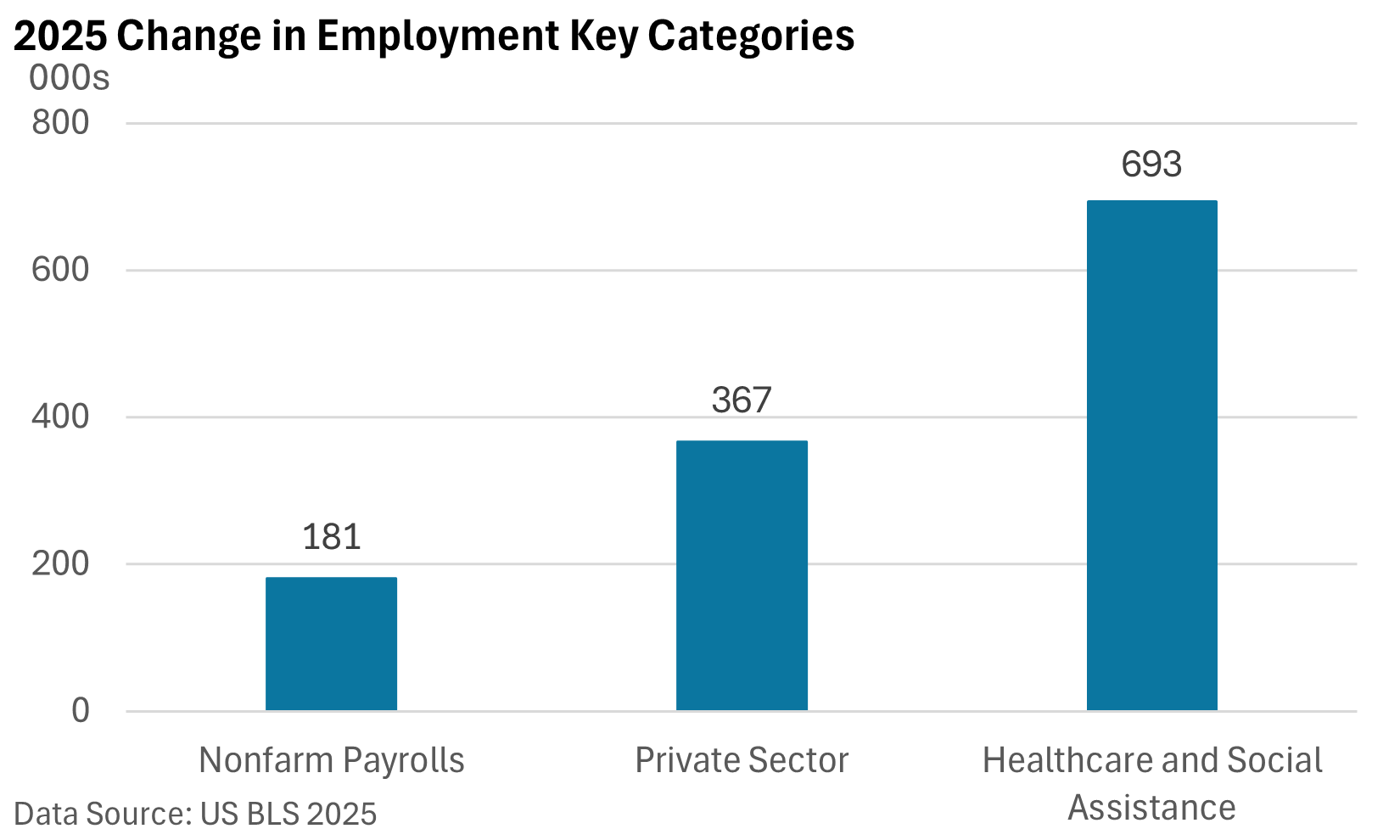
In summary, instead of 584,000 net new jobs in 2025, payrolls were revised to just 181,000.
Notably, the engine of job growth is the healthcare sector, which added 693,000 jobs last year. Outside of healthcare, private sector employment declined.
With all of this in mind, let’s briefly review January’s jobs data from the BLS.
Nonfarm payrolls rose by a better-than-expected 130,000, with jobs in the private sector rising by 172,000.
As we saw last year, healthcare continues to play an outsized role, with a 124,000 increase.
Additionally, the unemployment rate fell from 4.4% in December to 4.3% in January.
All in all, January’s data was a mix of good news and bad news. Payrolls increased, and the unemployment rate fell, but one industry fueled most of January’s job growth.
Elsewhere, the stock market was closed on February 16 in observance of Presidents’ Day.
Originally established in 1879 to honor George Washington’s birthday and still officially called Washington’s Birthday, it has since grown into a celebration recognizing all American presidents and their contributions to the nation.
Today, Presidents’ Day serves as a moment to reflect on the country’s history, leadership, and the ideals that have shaped the United States.
