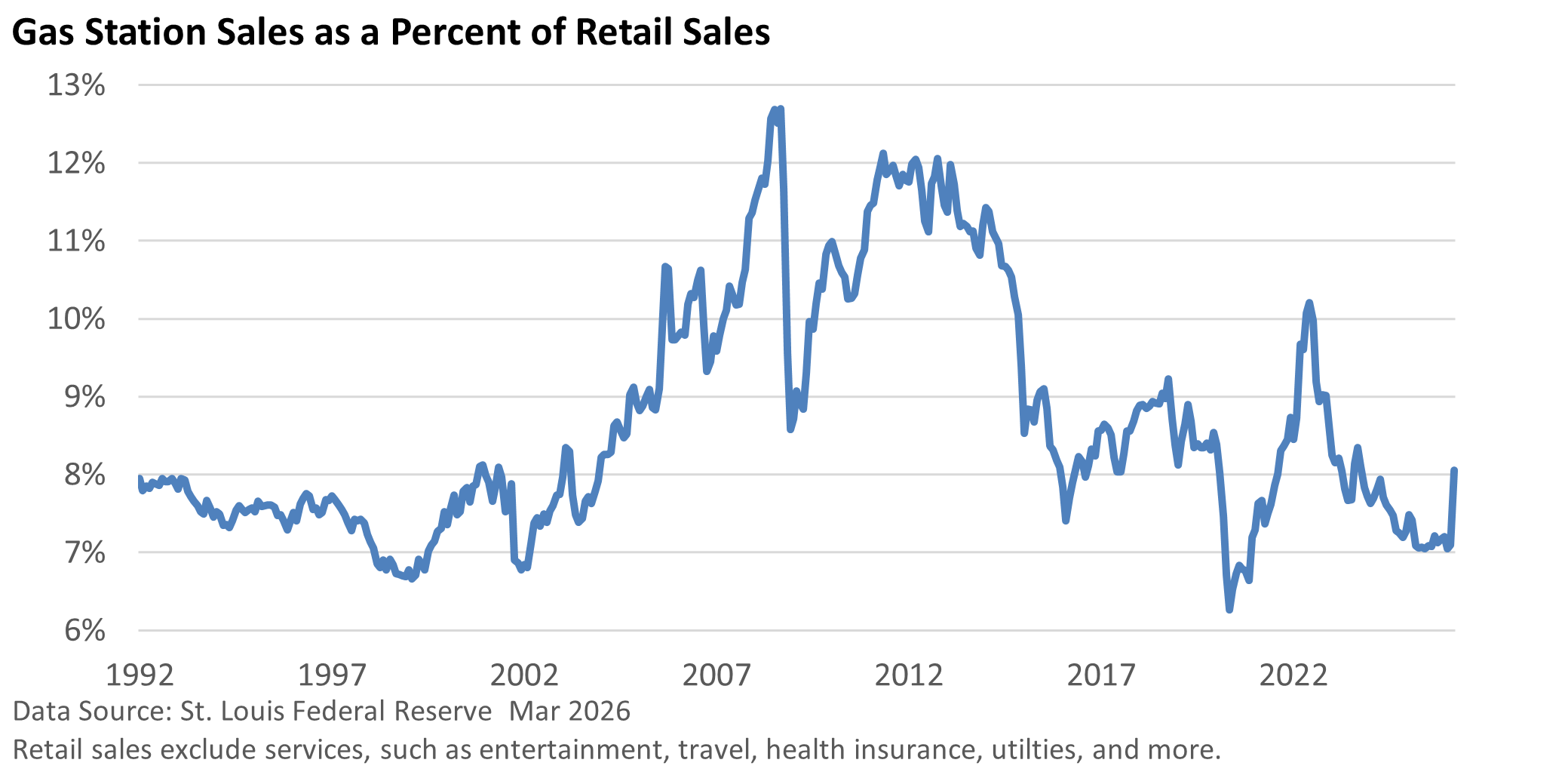





The U.S. Census Bureau reported a 1.7% increase in March retail sales, driven largely by a 15.5% jump at gasoline stations. The overall strength reflects higher prices at the pump, not strong underlying consumer demand.
Retail sales are goods purchased online or at the store.
Put plainly, if you drive a gasoline-powered vehicle, higher gasoline prices translate into higher spending for gasoline, and that was reflected in the March data.
But there was good news in the data, too. The higher price of gasoline didn’t eat into other categories. In other words, the shock of higher gasoline prices didn’t force most folks to cut back in other areas.
You see, if spending at gas stations is excluded, spending rose a healthy 0.6% in March. And that’s not a big surprise either.
Retail sales spending is ‘lumpy’ and can be affected by everything from weather to statistical quirks in the data.
That said, a spike in gasoline prices wouldn’t be expected to immediately force a reallocation in the family budget. Initially, most folks simply dip into their savings or add to their credit card balances, and spending holds up in other categories.
But as onerous as higher gas prices might be, if prices were to hold at today’s levels over an extended period of time, would they dampen economic growth as consumers are forced to choose between gasoline and other items or services?
As the graphic illustrates, family budgets have weathered worse. In part, autos are more efficient today, and more people are driving EVs.