





While various factors may influence borrowing costs, Treasury yields, particularly the 10-year Treasury, have a direct impact on consumers because they serve as the benchmark against which mortgage rates and many other long-term borrowing rates are priced.
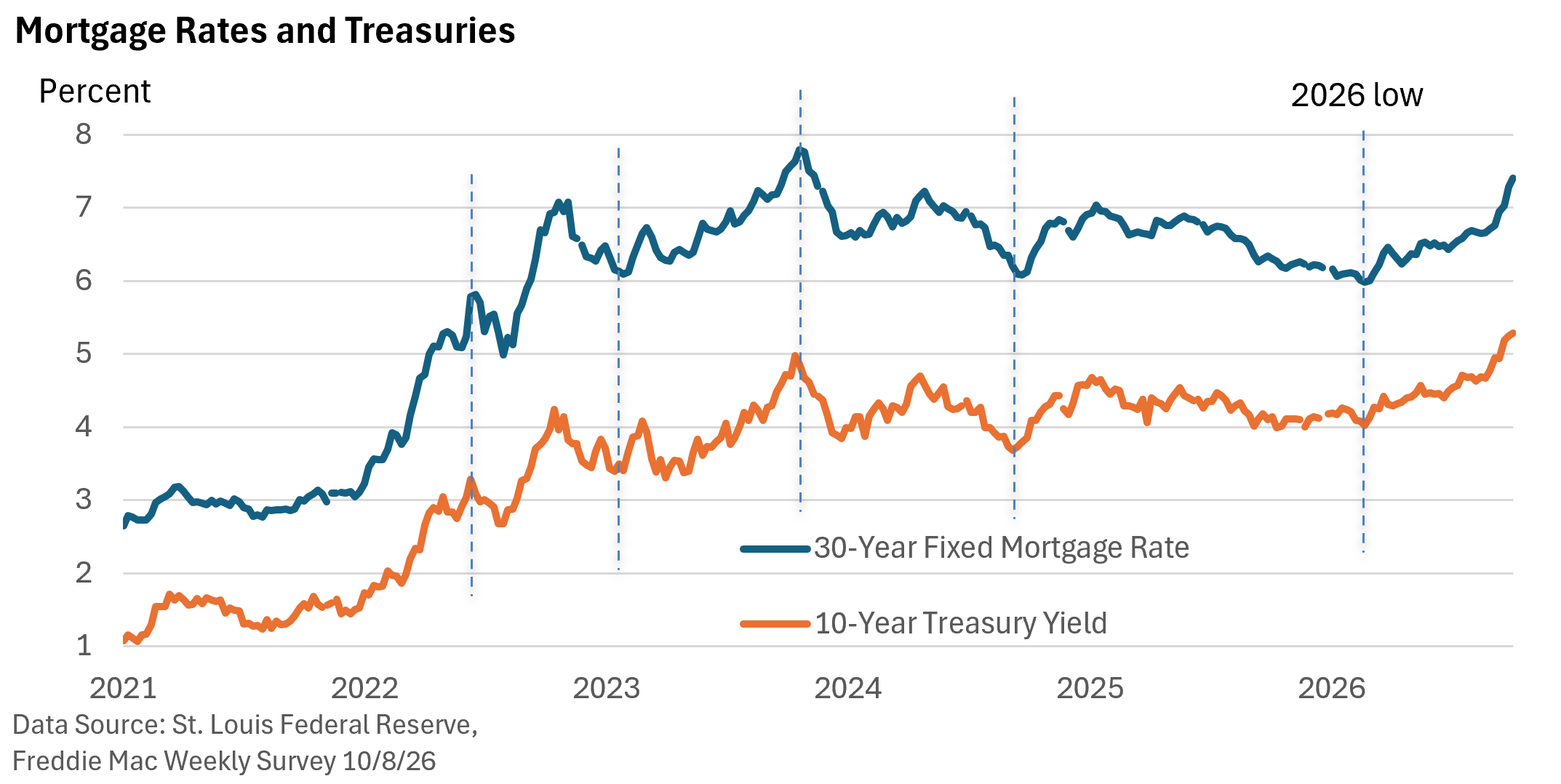
Look no further than this year. The 30-year mortgage bottomed out at 5.98% as the 10-year yield hit its 2026 low. Last week, the 30-year mortgage rose to 7.40%, the highest since late 2023.
How are higher rates impacting the housing market?
Redfin, a real estate brokerage, property search, and data-gathering firm, said last month that 21% of U.S. home sellers dropped their asking price during the four weeks ending September 20, the highest share for this time of year since it began gathering the data four years ago.
Meanwhile, the Mortgage Bankers Association said that the number of applications to refinance mortgages fell to the lowest level last week in almost two years.
But nationally, home prices are up slightly versus one year ago. Some potential sellers are reluctant to list, and homes for sale in a number of markets remain constrained, limiting choices for buyers and underpinning prices.
Nationally, Redfin calls the current market a ‘strong buyer’s market.’ Yet, we know that real estate is all about location, location, location, as realtors will remind us.
“Price drops are most common in Denver,” Redfin said, “which is a buyer’s market but less so than other places.”
Nashville, Miami, and Houston are the strongest buyer’s markets, with more than double the number of sellers versus buyers, and the top ten strongest buyer’s markets are all in the Sun Belt. But there are a few seller’s markets. For example, San Francisco sellers rarely cut prices thanks to a hot market driven by AI.
