





Released by the US Bureau of Labor Statistics (BLS), September’s nonfarm payroll report came in lighter than expected, and the unemployment rate unexpectedly inched higher.
How did investors react? Favorably. The disappointing report reduced the odds of a late-October rate hike, which investors viewed as good news.
Nonfarm payrolls increased by 29,000 in September, and the unemployment rate edged up from 4.1% in August to 4.2% in September.
Moreover, August’s rise of 162,000 was revised to 133,000. Monthly payroll figures can bounce around quite a bit, so a three-month average usually offers a better gauge of what’s happening in the labor market.
Though unimpressive, Figure 1 shows that job growth has been relatively steady over seven of the last nine periods.
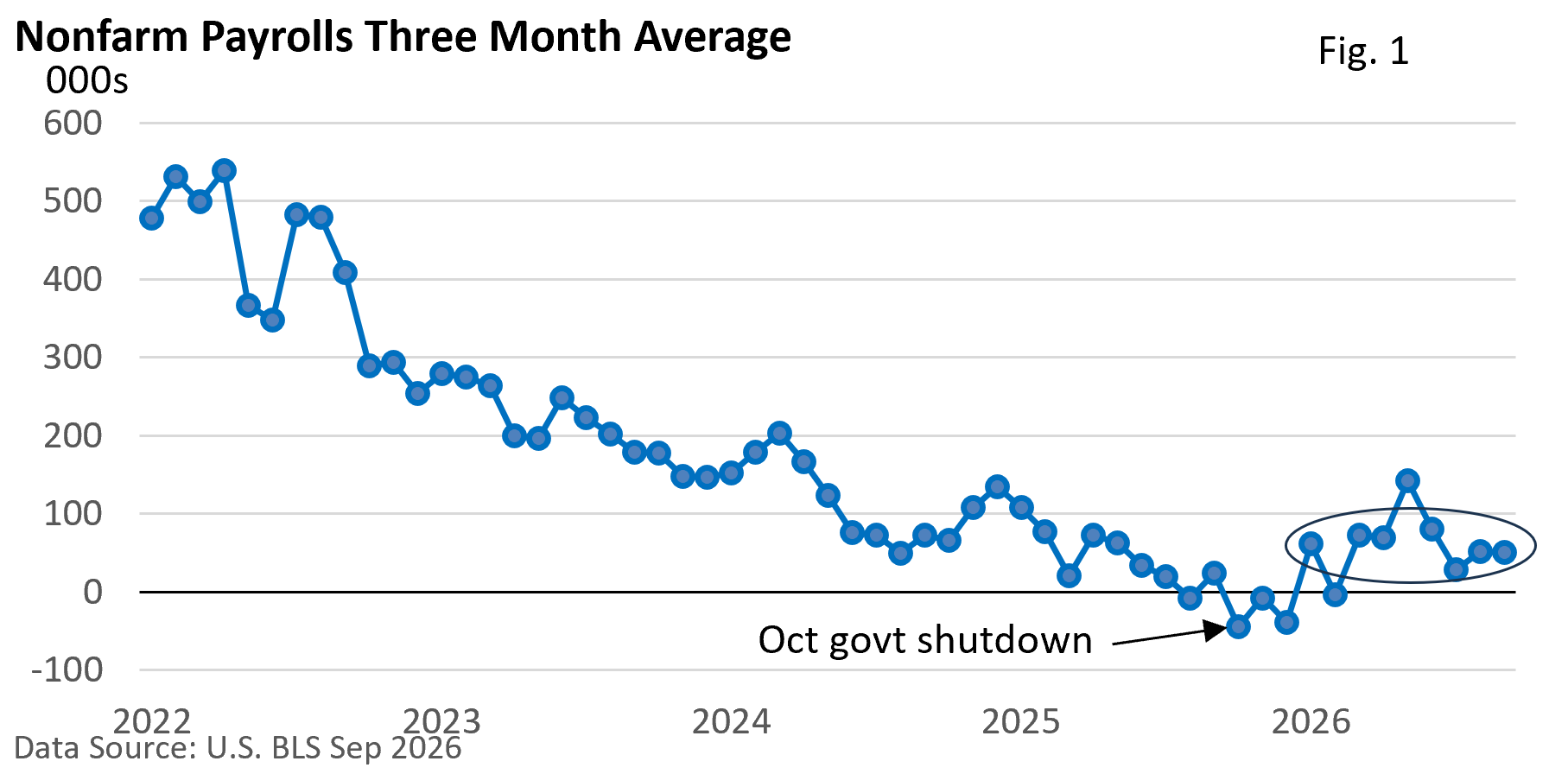
And lackluster growth is happening even as the economy appears to be accelerating. Last week, the US Bureau of Economic Analysis revised first- and second-quarter GDP higher, while the Atlanta Fed’s GDPNow model is signaling robust third-quarter growth.
Oh, and the uptick in the unemployment rate. Let’s call it a rounding error, as the jobless rate rose from 4.14% to 4.175% (Figure 2).
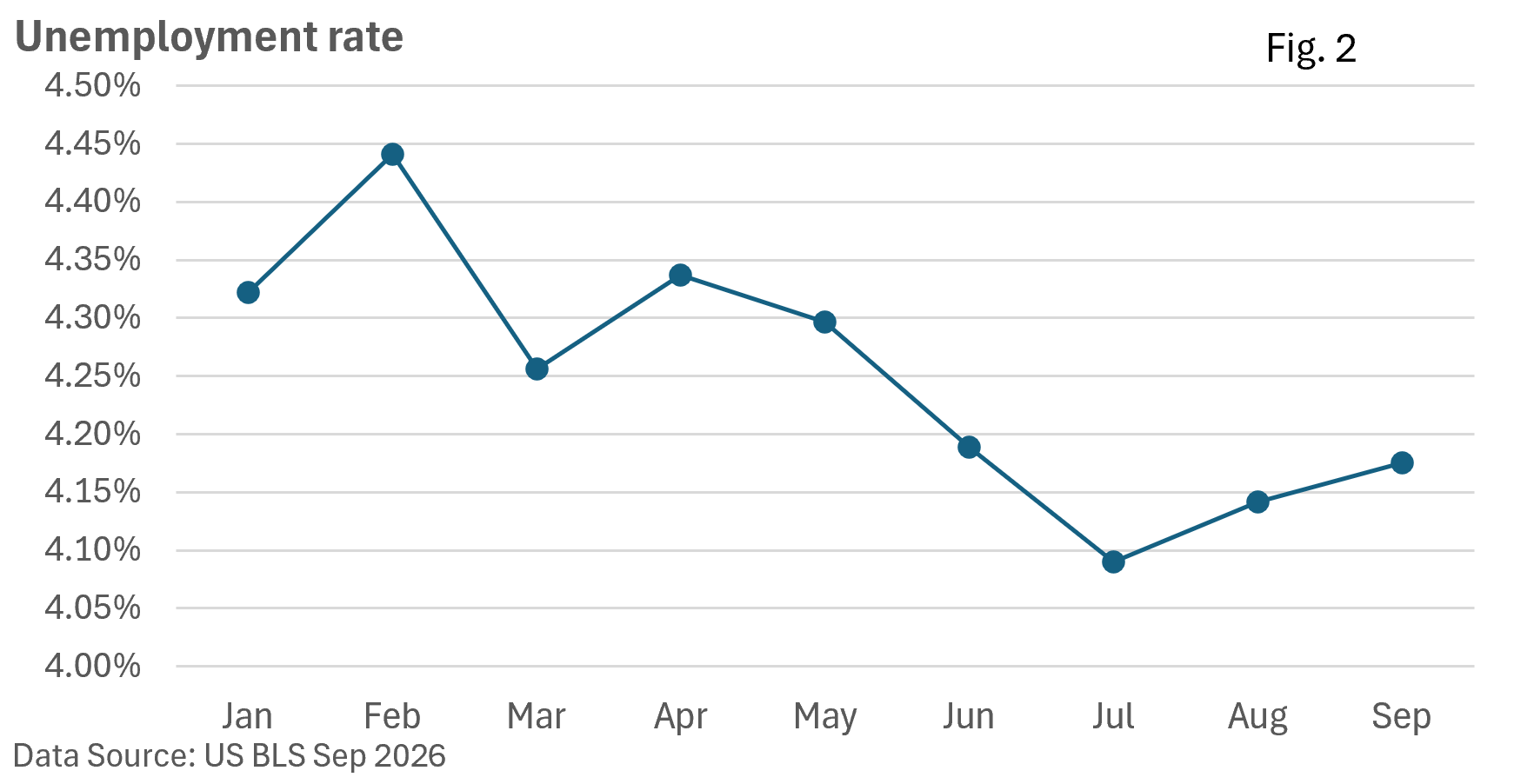
The unemployment rate rose due to a fast-rising labor force. While employment grew, labor force growth outpaced hiring. The difference: a small increase in the number of unemployed.
