





All that said, those focused on the long term recognize that short-term volatility is a natural part of the investing landscape.
As the legendary Warren Buffett once quipped, “Investors are buying a piece of a business, not just a stock, and American businesses are expected to be worth more in 10, 20, or 30 years.”
Why? The U.S. economy has expanded over the past 10, 20, 50, and even 200 years, and the stock market has broadly followed that upward trajectory. While market returns don’t move in lockstep with economic growth, and bear market risks never fully dissipate, stocks have historically delivered stronger gains over the long run, driven by the ability of American companies to grow earnings and compound profits over time.
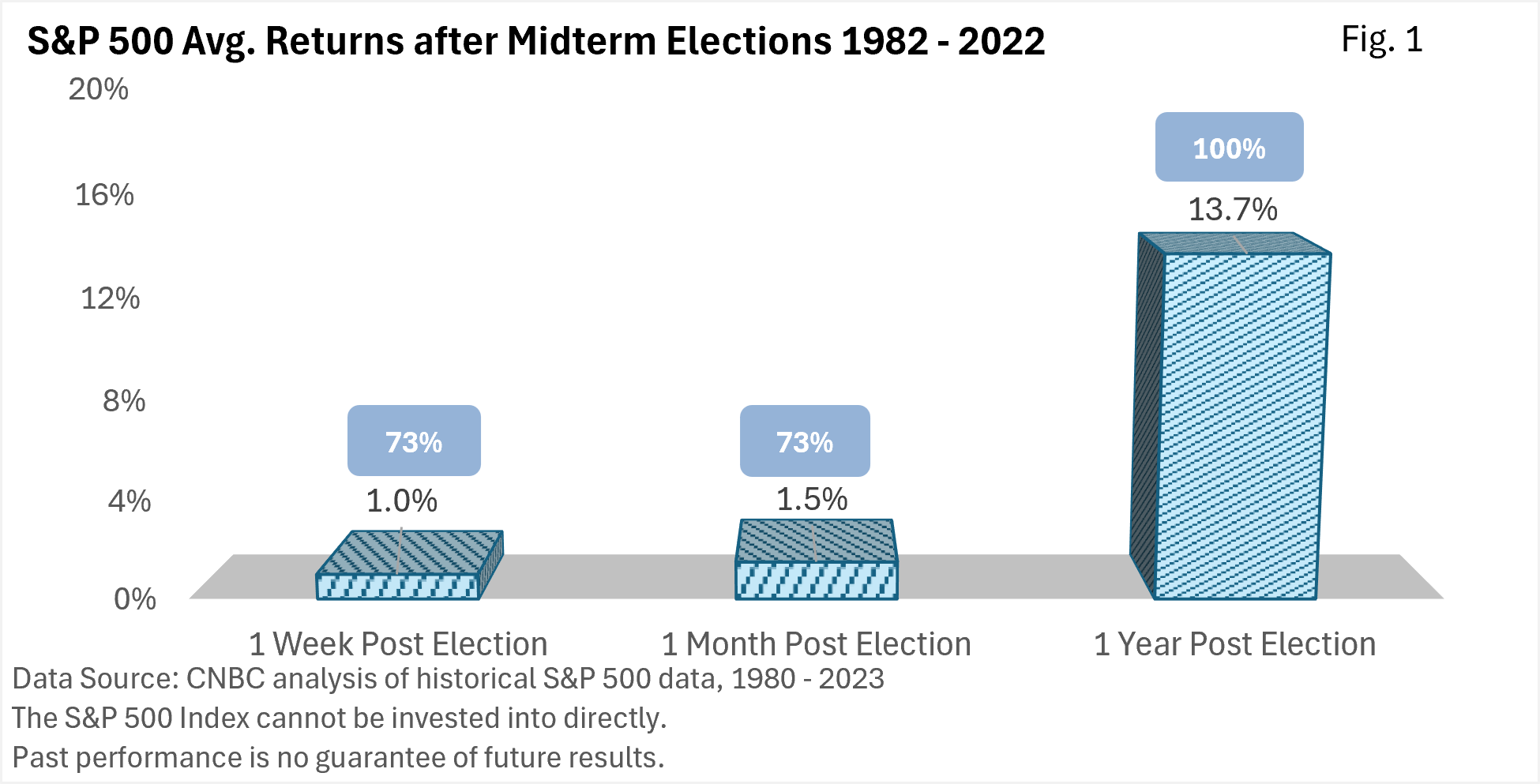
All that said, how has the stock market reacted to elections? Let’s review Figure 1 and briefly explain.
One week and one month after a midterm election, the S&P 500 has generated average returns of 1.0% and 1.5%, respectively, based on data going back to 1982. Over those brief periods, the index posted gains 73% of the time.
One year after a midterm election, the S&P 500 delivered an average return of 13.7%, finishing higher in each instance in the period surveyed.
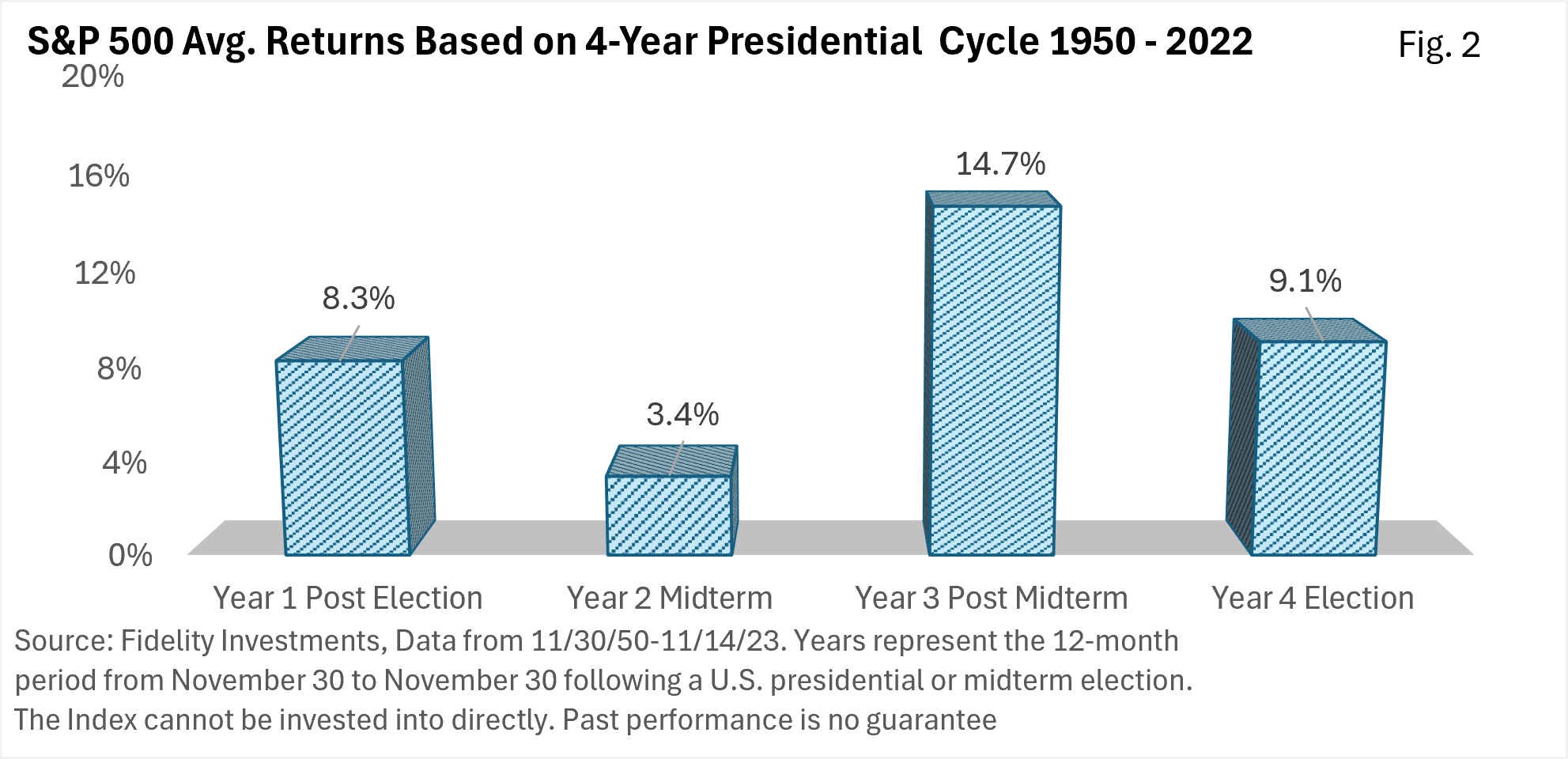
However, what has historically mattered most for investors is not the election calendar but the trajectory of the fundamentals, including corporate profits, economic growth, inflation, Federal Reserve policy, and interest rates.
