





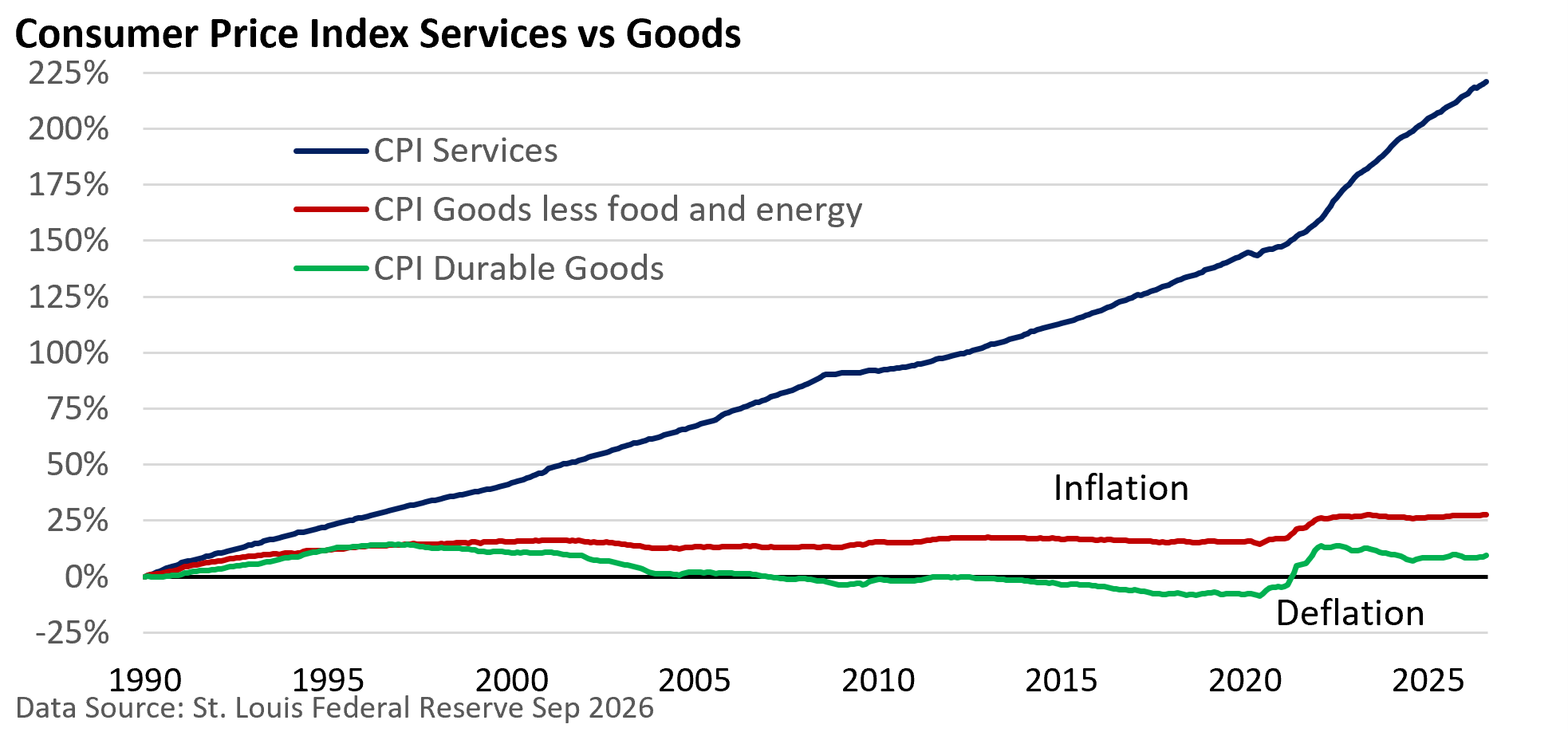
Services include items such as utilities, travel, recreation, hotels, sporting events, insurance, doctor visits, concerts, Internet, and rent. Of course, it excludes consumer goods.
Consumer goods excluding food and energy include household items like soap, toilet paper, and toothpaste. It would also include cleaning products, clothing, toys, and various items you buy online that aren’t meant to last long term. Durable goods are also included in this category.
Durable goods are goods designed to last over three years, such as appliances, furniture, electronics, and autos. They are a subset of consumer goods.
So, what stands out in the chart? The price of services has steadily marched higher over the last 35 years and has far outpaced the cost of everyday household items.
Consumer goods, however, were very stable between the early 2000s and the pandemic. The most striking trend was durable goods, which actually fell in price during the 2000s and 2010s.
Why were consumer goods so stable during the 20-year period prior to severe supply chain disruptions tied to the pandemic?
- Foreign competition, globalization, and the rise of goods imported cheaply from China.
- Technological improvements that increase efficiency in manufacturing.
- Excess global capacity exacerbates intense foreign competition.
- Periods of strength in the dollar (lowers the cost of imports).
All in all, globalization and foreign competition helped keep a lid on goods prices for much of the past two decades.
But services tell a different story. You can buy a television from a manufacturer halfway around the world, but you cannot rent a local apartment from a foreign competitor or attend a hometown concert, theater
performance, or sporting event supplied from overseas.
Today, consumer goods inflation remains below services inflation, but prices are edging higher in a sector that was once accustomed to outright price declines—deflation.
Reasons include the AI buildout, which is raising prices for some components amid strong demand, a reconfiguration of supply chains, tariffs, and higher transportation and raw material costs.
As the Federal Reserve gathers this week to decide on interest rates, various policy goals and economic complexities that help support the economy also complicate the path back to price stability.
