





The recent pickup in job growth is welcome news for job seekers. But June’s jobs report left more questions than answers. Here’s why.
Nonfarm payrolls rose by a smaller-than-expected 57,000 in June, according to the U.S. Bureau of Labor Statistics. In addition, April and May were revised lower by a combined 74,000.
Overall, it was not a particularly impressive month for payroll growth. However, employment data can be volatile from month to month. An uneven pattern is not unusual in the labor market.
As we’ve seen for some time, health care continues to be the engine of growth, generating 47,000 new jobs in June.
What really raised eyebrows, however, was the loss of 61,000 jobs in leisure and hospitality, the sector’s largest decline since late 2020.
Even more surprising, the drop occurred during a month when foreign visitors were flocking to the U.S. for the FIFA Club World Cup.
You’d expect hiring as companies staff up restaurants, bars, and maybe even hotels. But, at least according to the government’s survey, that didn’t happen. All that said, something seems amiss. But if that’s the case, these anomalies tend to wash out over time.
Still, there was some good news. The unemployment rate fell to 4.2% in June from May’s 4.3%.
Notably, the jobless rate has remained within a fairly narrow range for two years, averaging 4.24% over that period.
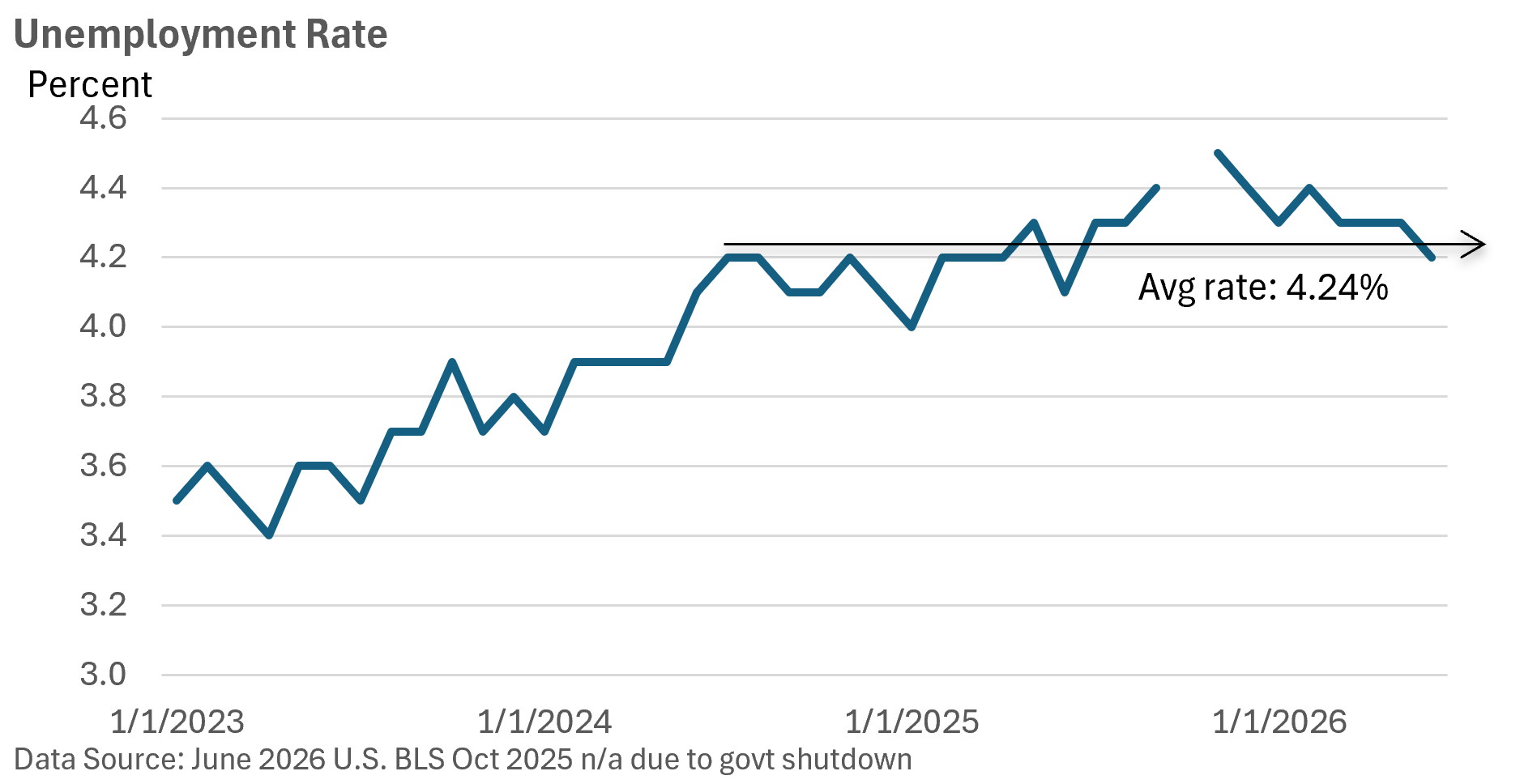
During that two-year period, the average monthly increase in nonfarm payrolls was 54,000.
Historically, that’s soft, but slow labor force growth has prevented the jobless rate from rising. Slow job growth offers little comfort to those seeking new jobs, but the number of unemployed remains reasonably low, according to government data.
