




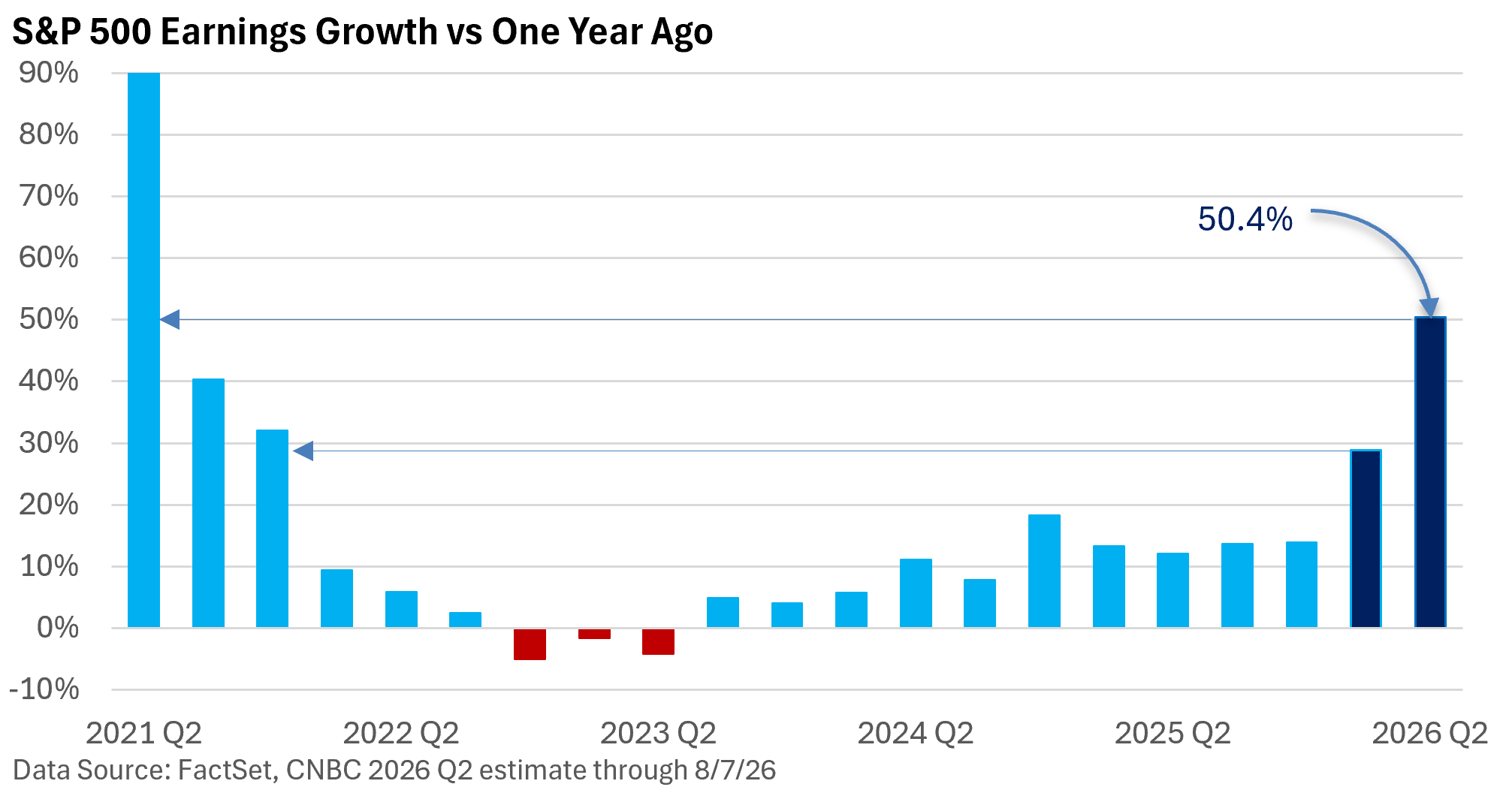
In a solid earnings season, we’d generally expect S&P 500 companies to deliver double-digit profit growth, meaning earnings growth of at least 10% versus a year ago (20% tops). That’s not a hard-and-fast rule, but it provides a useful benchmark for evaluating the strength of a quarter.
Eight of the last nine quarters have exceeded that hurdle. What’s unusual: Q1 approached 30%, the best reading since 2021 Q4. With almost 90% of firms having reported Q2 profits, earnings are up about 50%, according to FactSet.
In other words, bond investors have gradually backed away from bonds (bond prices and bond yields move in opposite directions) amid worries about inflation and the Fed’s credibility in its fight against inflation.
Additionally, the large federal deficit and enormous need for capital for the AI buildout may also be playing a role.
Perhaps investors simply need to adjust to his style. Over the last two decades, investors have grown accustomed to guidance, signaling, and plain talk about the Fed’s intentions.
That’s not Warsh’s style.
Maybe the Fed chairman simply didn’t have the votes to raise rates. But I can’t stress enough how unusual it would be for a Fed chairman to side with the minority. It’s never happened.
There are those who believe inflation has peaked, and rate hikes aren’t needed. And Fed policy can’t produce one drop of oil.
Even so, the lack of congruence between tough talk and inaction left investors questioning the Fed’s commitment to its message.
