





Following concerns early in the year, the job market appears to be re-awakening after April’s closely followed labor report.
On Friday, the US Bureau of Labor Statistics (BLS) reported that nonfarm payroll rose by 115,000, more than double expectations. Private-sector jobs rose by 123,000. And gains were broader-based and not limited to strong growth in healthcare, which is something we’ve seen recently.
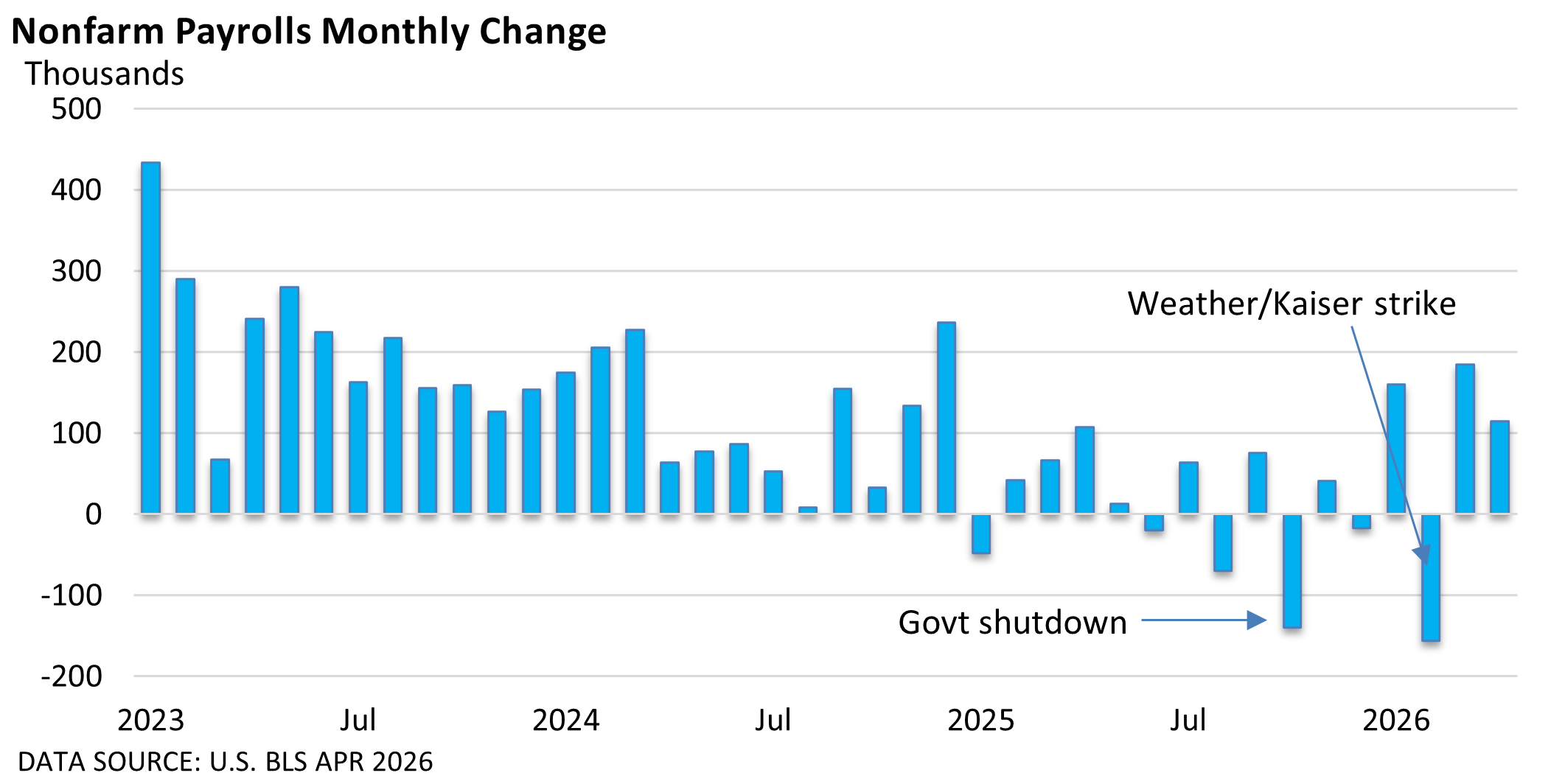
Just a short time ago, Federal Reserve officials were debating whether they needed to keep cutting interest rates to prop up what appeared to be a weakening labor market. That no longer seems to be the case.
Of course, it’s just one month, and the data can mislead if we put too much emphasis on one data point. Note that March’s big gain was a rebound that followed one-off factors that contributed to February’s weakness.
Let’s review one other piece of data that might suggest the job market is firming.
While high-profile layoffs have made headlines, actual filings for unemployment benefits remain subdued. Initial claims came in at just 200,000 for the week ended May 2, according to the Department of Labor. Those who lose jobs would be expected to apply for aid, making such filings a useful measure of actual layoffs.
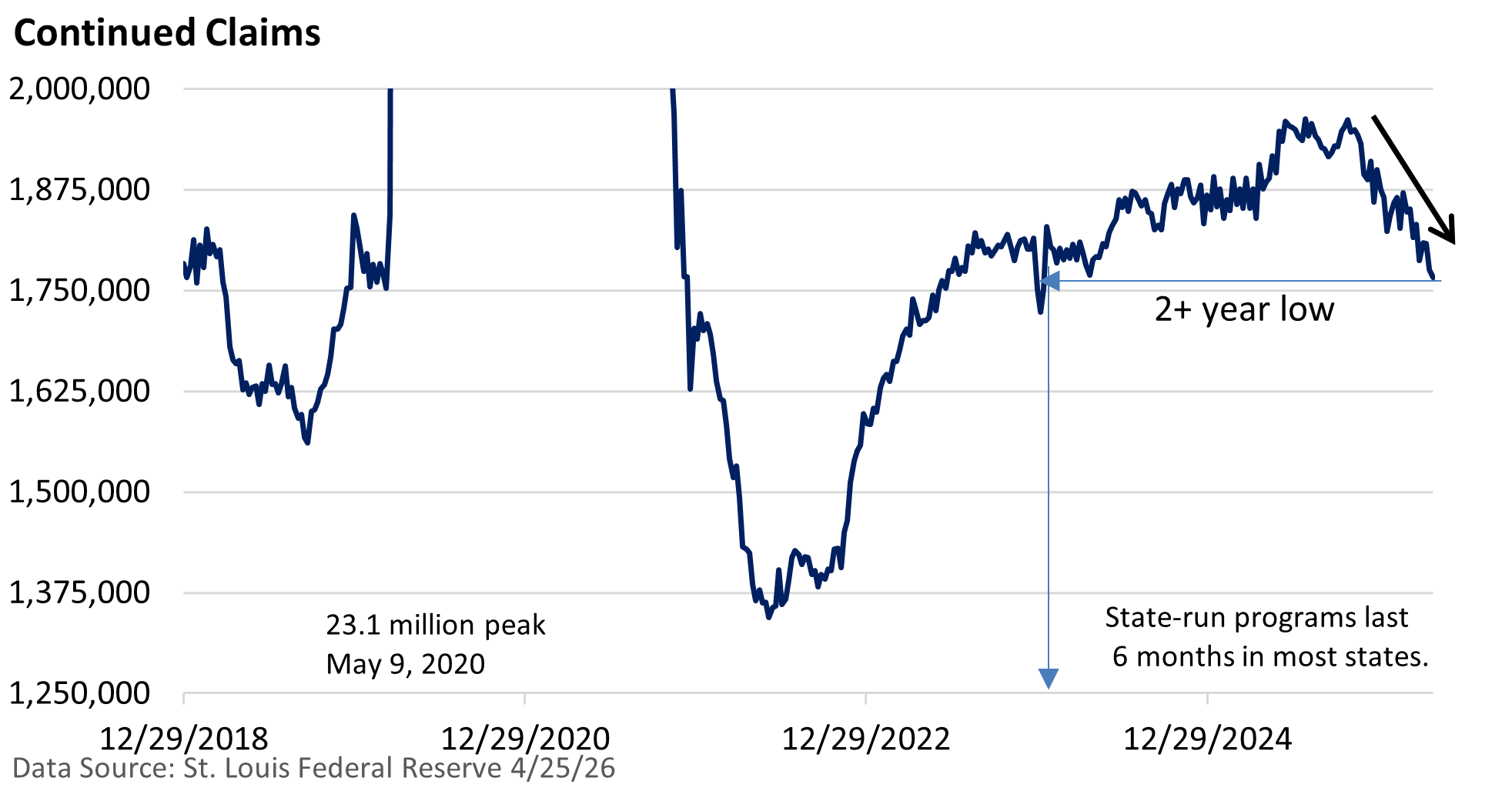
Unlike initial claims, continued claims reflect the number of people who remain on jobless benefits, since state agencies require recipients to file regularly to keep receiving aid.
As shown, filings have been trending lower, suggesting that it may be easier for unemployed workers in some sectors to find new jobs (those who return to work no longer file).
While not all indicators are positive, overall, this suggests a more stable job market.
