





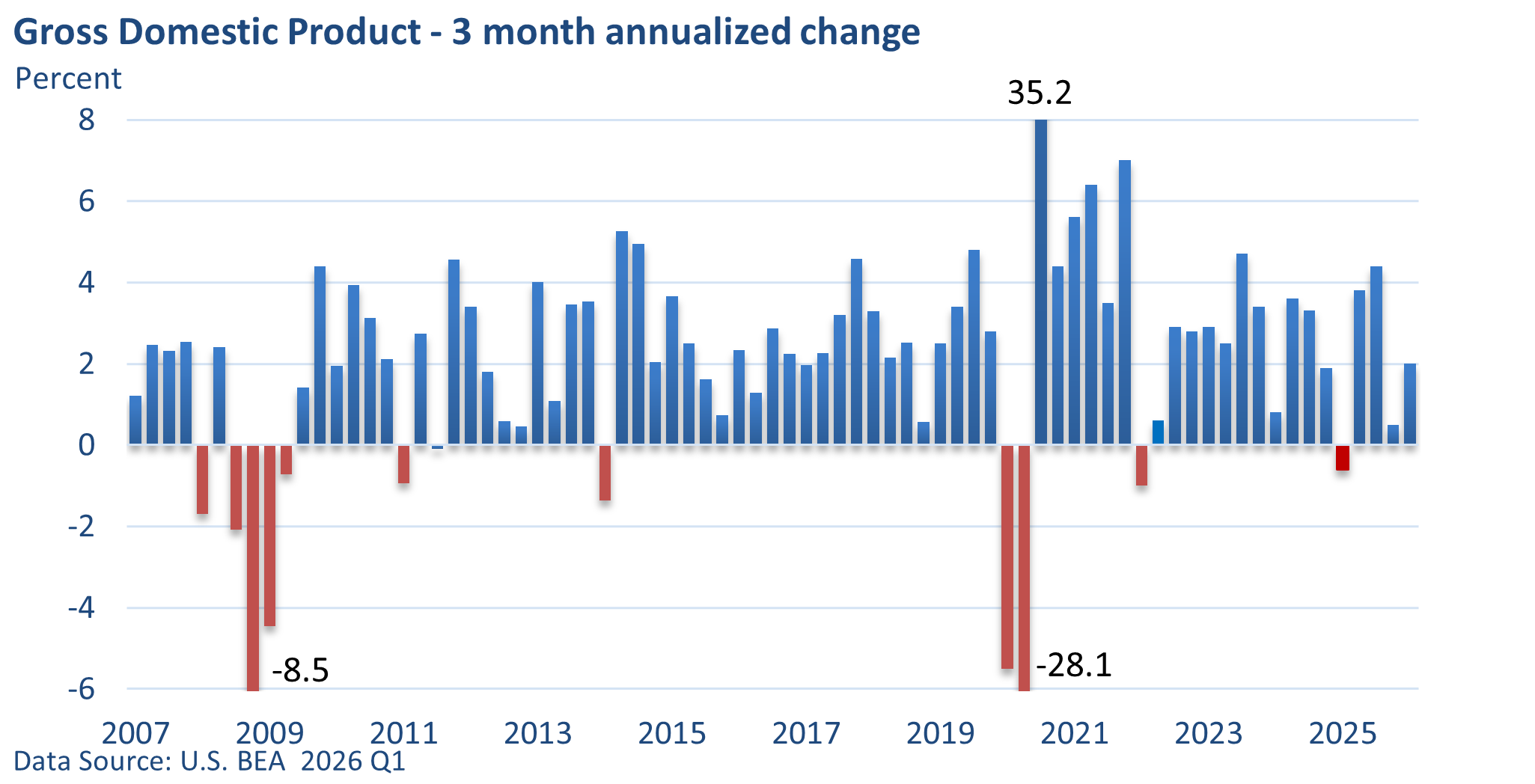
Although consumer spending, which accounts for nearly 70% of GDP (U.S. BEA), moderated, the AI boom and seemingly insatiable demand for data center–related equipment provided a critical pillar of support for the economy in the first quarter.
In fact, business spending on AI accounted for nearly half of GDP’s rise in Q1. A rebound in government spending and a return of workers (public and private-sector contractors) following the government shutdown in Q4 also aided output. That’s unlikely to repeat in the current quarter.
Separately, Federal Reserve Chief Jay Powell delivered his final press conference on Wednesday. As expected, the Fed held its key rate steady at 3.50–3.75%. Powell’s term concludes this month, with his successor, Kevin Warsh, expected to be confirmed in the coming days.
Yet, Powell’s final meeting as Fed chair wasn’t devoid of drama. He plans to remain at the Fed, as his concurrent term as a Fed governor ends in early 2028. He didn’t indicate how long he intends to serve.
Meanwhile, three Fed officials who voted in favor of holding rates steady favored shifting the Fed’s rate-cut bias to neutral amid worries about inflation.
Even so, the slightly more hawkish tone didn’t rattle investors. With Powell on his way out as Fed chief, focus has shifted to what comes next at the Fed. Instead, investors stayed focused on solid growth and strong Q1 earnings.
Last week, the S&P 500 and the tech-heavy Nasdaq touched new highs on Thursday and added to gains on Friday.
