





author avatar
Mark Chandik

Apr 21, 2025

Flexing Economic Muscles

As we approached the early April selloff, much of the data suggested that economic activity was expanding. Let’s examine two important pieces of data.

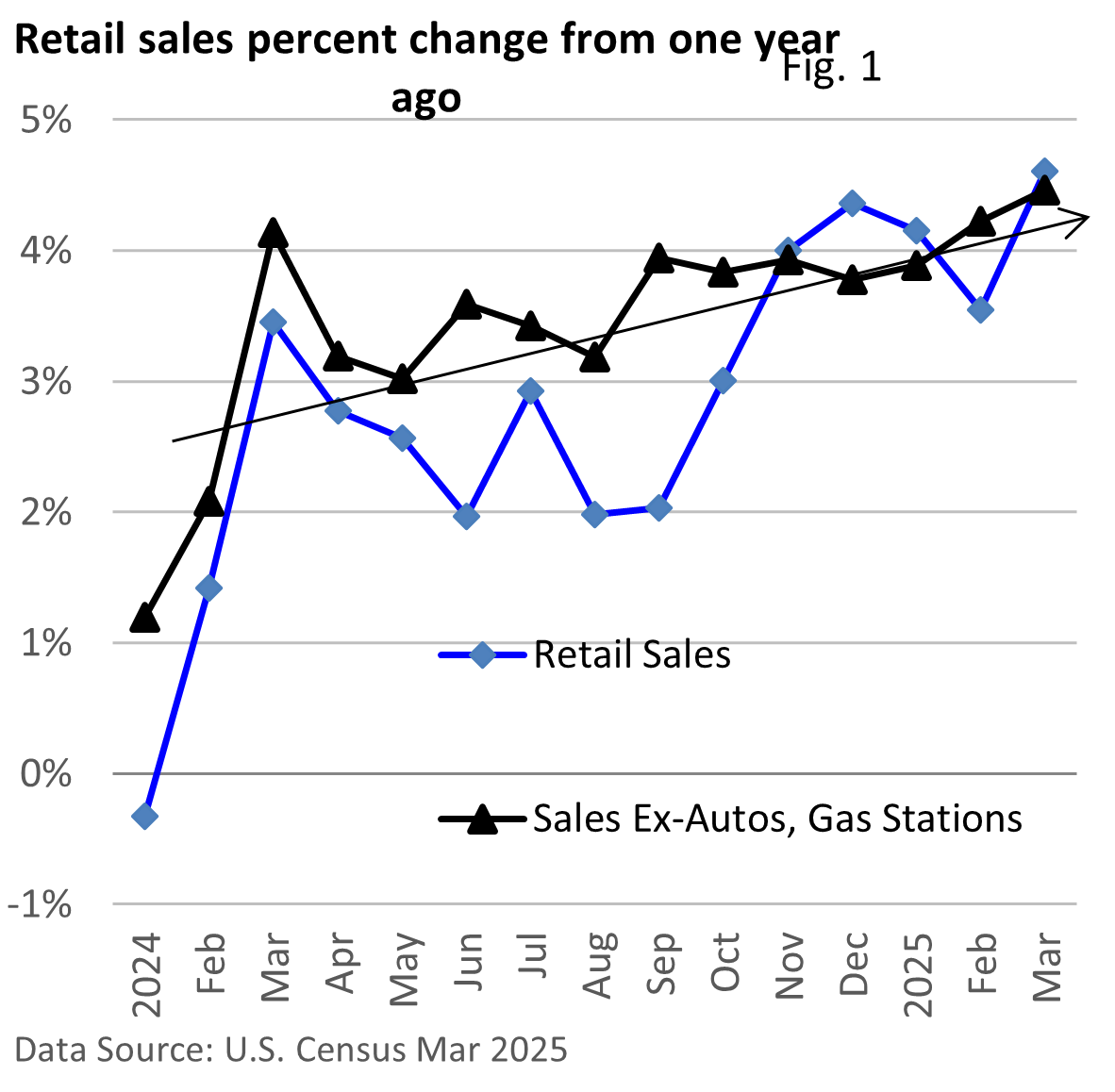
Led by a 5.3% surge in auto sales, retail sales rose a strong 1.4% in March.

While some buyers were hoping to jump in front of any tariffs (especially autos), February’s numbers were also respectable. As Figure 1 indicates, sales have been trending higher.
In their quarterly earnings releases, the major banks acknowledged that consumers are spending, according to the Wall Street Journal.

Moreover, in its quarterly report, the CEO of American Express (AXP $251) said recent metrics are “in many cases, better than what we saw in 2024.”

But economic growth extends beyond just the ‘stuff’ you and I buy.

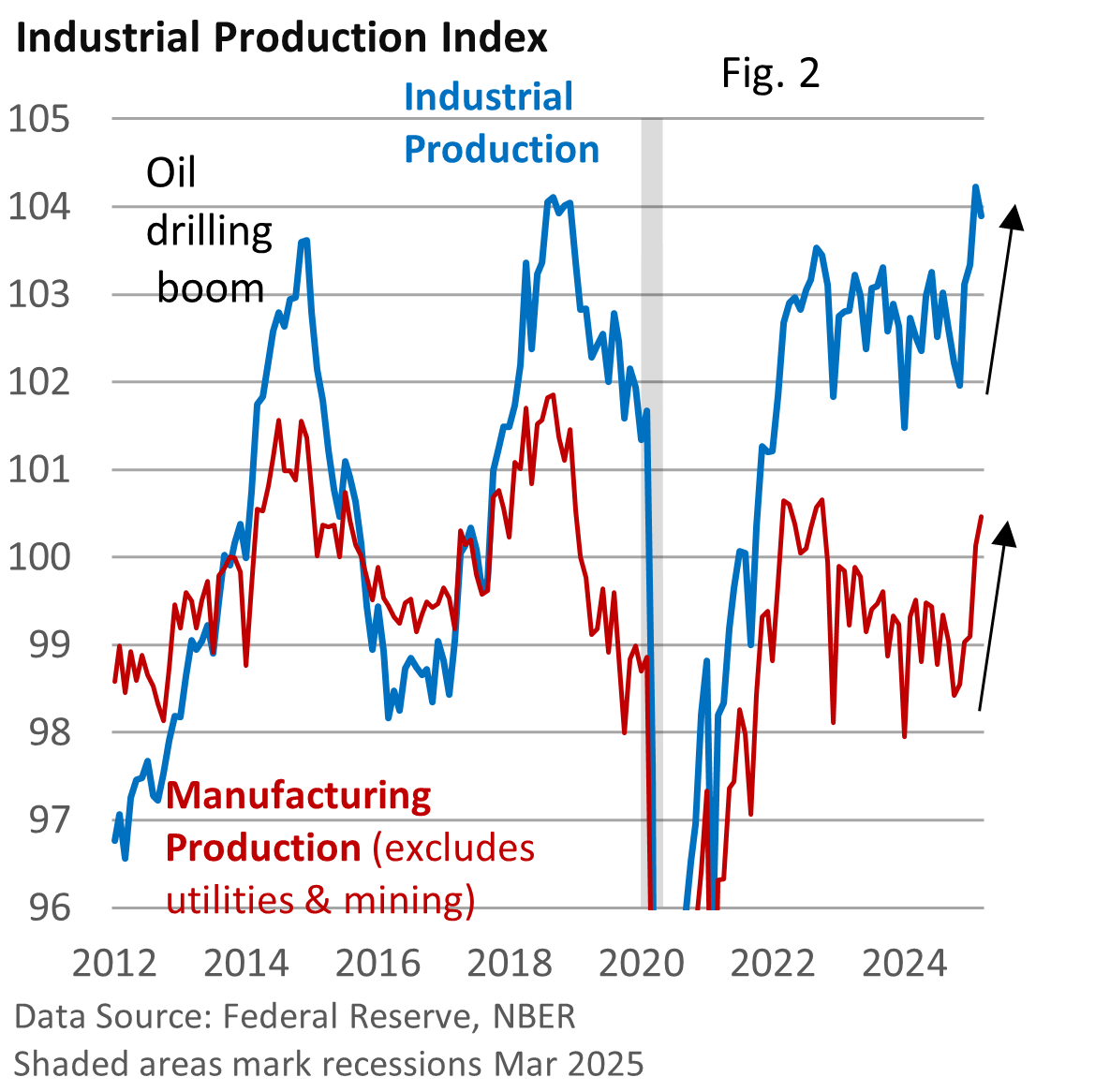
After being stuck in a sideways pattern for over two years, life is returning to the industrial sector as evidenced by Figure 2.

The only reason industrial production was down 0.3% in March: a 6% decline in output from utilities.

Otherwise, manufacturing rose for the 5th month in a row, gaining 0.3% in March.
Given a massive surge in imports over the last couple of months (U.S. Census), as companies hoped to jump ahead of any tariffs that might be imposed, Gross Domestic Product may be weak or decline in the first quarter (a surge in imports subtracts from GDP).

Meanwhile, Dept. of Labor data points to a low level of layoffs, and job growth has been solid, according to the U.S. Bureau of Labor Statistics.

It added up to economic momentum heading into the recent market turmoil.

author avatar
Mark Chandik

Reproduction Prohibited without Express Permission. Copyright FDP Wealth Management. All rights reserved. Advisory Services offered through FDP Wealth Management, LLC, a state Registered Investment Adviser and Valmark Advisers, Inc. a SEC Registered Investment Advisor. Securities offered through ValMark Securities, Inc., Member FINRA/SIPC. 130 Springside Drive, Suite 300, Akron, OH 44333-2431 800.765.5201 Prosperity Partners and FDP Wealth Management, LLC are separate entities from ValMark Securities, Inc. and Valmark Advisers, Inc. Prosperity Partners, FDP Wealth Management, LLC, ValMark Securities, Inc., Valmark Advisers Inc., and their representatives do not offer tax advice. You should consult your tax professional regarding your individual circumstances. Indices are unmanaged and cannot be invested directly in. Past performance is not a guarantee of future results.

Indices are unmanaged and do not incur fees, one cannot directly invest in an index. You should consult your tax professional regarding your individual circumstances. This information is provided by Financial Jumble, LLC. Financial Jumble, LLC is a separate entity from ValMark Securities, Inc. and ValMark Advisers, Inc.

RELATED POSTS

A Murky Fed Message

“All hat and no cattle” is a traditional cowboy phrase—especially popular in Texas—describing someone who is basically a poser: plenty of talk, lots of sparkle, but little to back it up. It’s all talk and no action, and that’s the takeaway from Federal Reserve Chair Kevin Warsh’s second Fed meeting and subsequent press conference.

Social Security and You

The trust fund that supports Social Security retirement benefits is projected to be depleted in the fourth quarter of 2032. At that point, ongoing revenue from Social Security payroll taxes is expected to cover approximately 78% of scheduled retirement benefits.

Chips in Flux

Since the most recent market low at the end of March, semiconductors (microchips, commonly called chip stocks) have been a very popular trade. In less than three months, the PHLX Semiconductor Index has more than doubled—see Figure 1.

Oil Has Given Back Gains, but Gasoline—Not So Much

Just before the start of the war, WTI crude oil traded at about $67 per barrel, according to MarketWatch. By last week, the price of oil had fallen to within about $1 of its pre-war price.

A Muddy Jobs Report

The recent pickup in job growth is welcome news for job seekers. But June’s jobs report left more questions than answers. Here’s why.