





Just before the start of the war, WTI crude oil traded at about $67 per barrel, according to MarketWatch. By last week, the price of oil had fallen to within about $1 of its pre-war price.
However, the same can’t be said for the average U.S. price of regular gasoline, which remains over 80 cents per gallon above the late February price, according to GasBuddy. What gives?
First, seasonality affects gasoline prices. Figure 1 illustrates the average change in gas prices over the last quarter-century. On average, prices rise until Memorial Day, plateau over the summer, and drop after Labor Day.
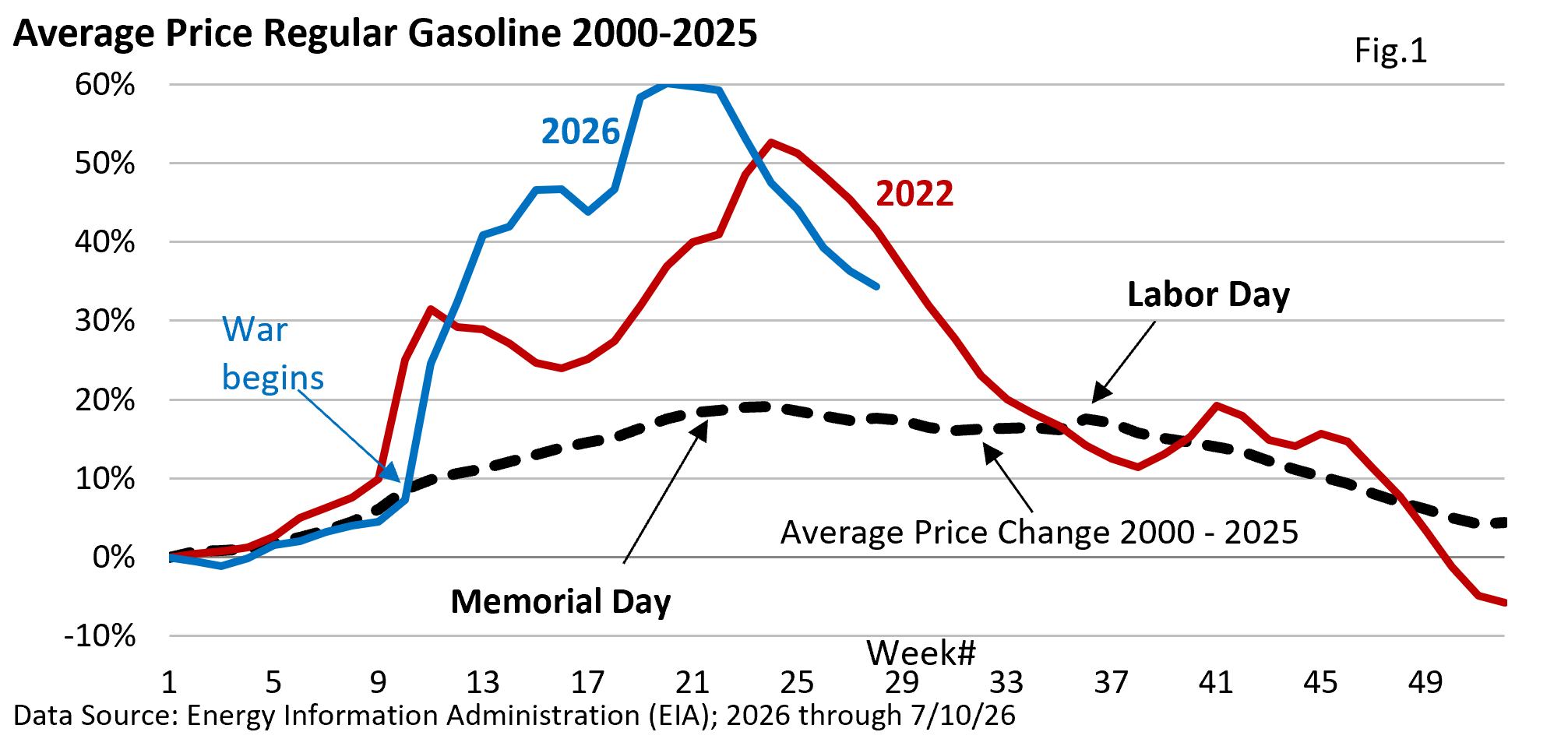
To begin with, seasonality is a factor. But seasonality isn’t entirely to blame.
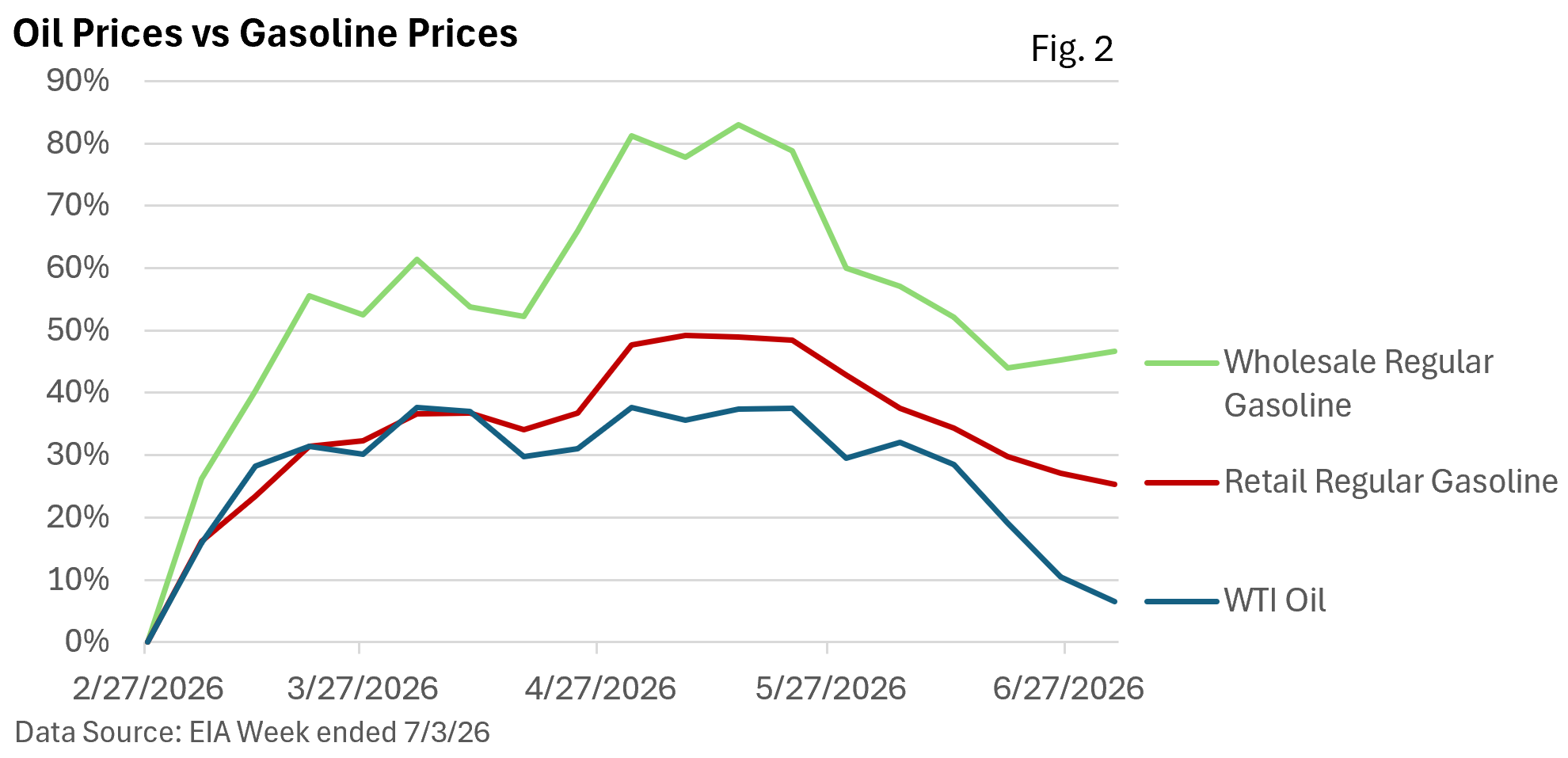
Figure 2 highlights the changes in wholesale gasoline prices, retail gasoline, and WTI crude oil since the beginning of the war—see Figure 2.
Oil is nearly back to the pre-war level—not so for gasoline.
Note that wholesale gasoline remains elevated. If wholesale gasoline had decreased in tandem with oil, we could hold retailers and their fatter profit margins accountable. But that doesn’t appear to be the case. Instead, the spread between wholesale gasoline and oil is quite elevated.
What does the unemployment rate tell us? At its core, it helps answer whether job growth is strong enough to keep the jobless rate from rising, or better yet, strong enough to push it lower.
During that two-year period, the average monthly increase in nonfarm payrolls was 54,000.
Historically, that’s soft, but slow labor force growth has prevented the jobless rate from rising. Slow job growth offers little comfort to those seeking new jobs, but the number of unemployed remains reasonably low, according to government data.
