





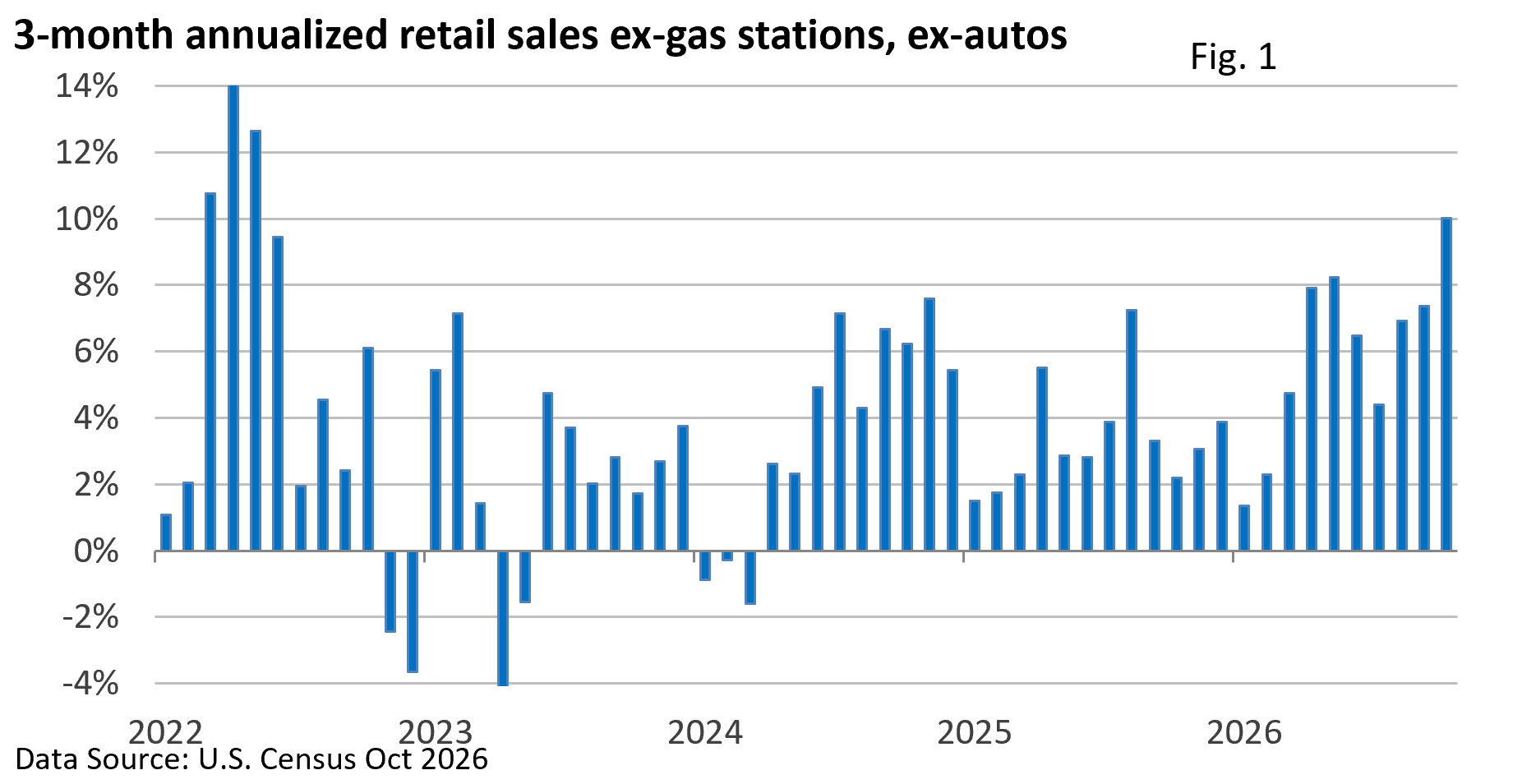
In October, the US Census reported that retail sales rose 0.2%, as a 1.6% decline in the volatile auto sales category slowed overall sales. Outside of autos, sales rose a solid 0.6%. Remove autos and gas station sales, which helps filter out changes in gas prices, sales were up 0.5%.
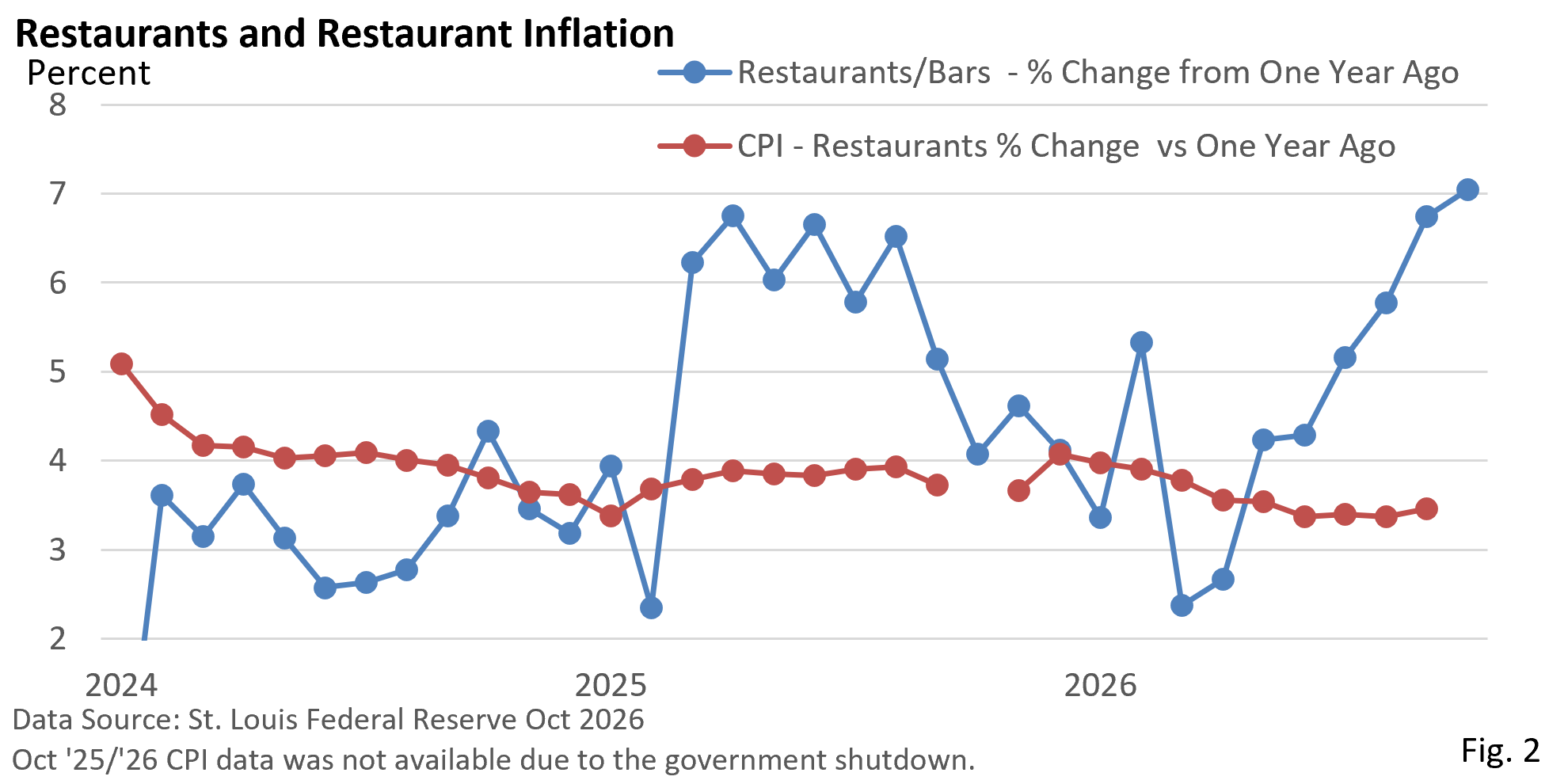
One of the clearest signs that consumers are still spending is restaurant activity, a quintessential form of discretionary spending. Despite widespread complaints about high prices, consumers continue to open their wallets (Figure 2).
The blue line highlights the annual change in spending at restaurants and bars, while the red line highlights the annual rate of inflation at those same locations.
Much of the recent weakness has been concentrated in areas tied to the AI theme. While many technology companies continue to report strong growth, investors are scrutinizing spending plans, competitive pressures, and the profitability of AI-related investments.
Concerns surrounding the broader AI ecosystem have led to a reassessment of valuations across some of the market’s biggest winners.
More broadly, the pullback appears driven by sentiment rather than a sudden deterioration in economic fundamentals. Earnings growth remains positive, consumer spending continues to hold up, and recession fears remain subdued.
However, the departure of CEO and co-founder Jensen Huang from Nvidia (NVDA $126), the prospect of tighter U.S. restrictions on chip exports to Southeast Asian data centers, and uncertainty surrounding the scope of local data center moratoriums have injected a renewed dose of uncertainty into the market.
After a strong run for stocks, investors have become less willing to pay premium valuations.
